Agentic Task Management: The Bridge Between Humans and AI Agents
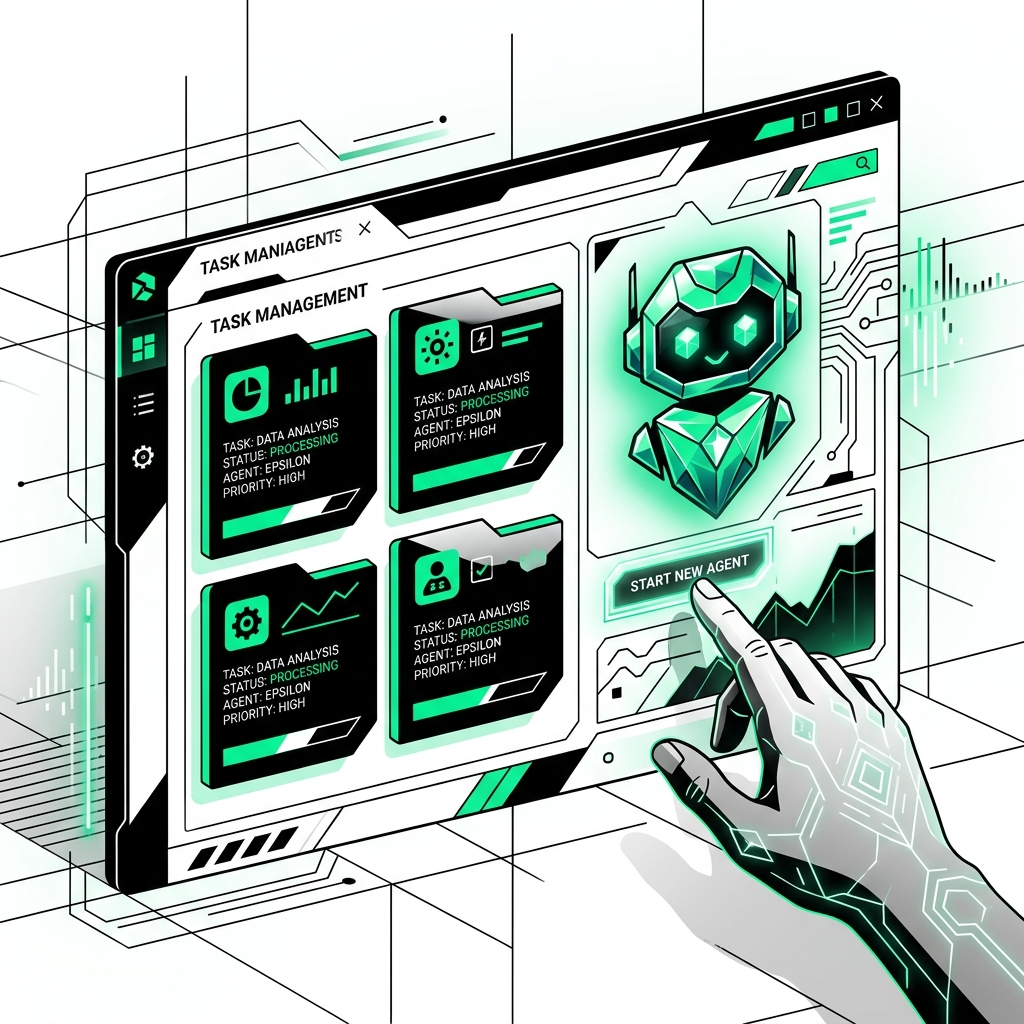
As AI agents transition from simple chatbots to autonomous systems capable of executing complex, multi-step workflows, a new challenge has emerged: How do we manage them without becoming a bottleneck?
When you use tools like Claude Code, you're no longer just asking a question; you're delegating a mission. But delegation without structured oversight leads to either constant terminal watching or a total loss of control.
This is where Agentic Task Management comes in.
Moving Beyond the Terminal
Traditional agent interactions happen in the terminal. While powerful, terminal logs are ephemeral and hard to track as projects grow. If an agent hits a blocker while you're grabbing coffee, the entire workflow stalls until you return and scroll back through hundreds of lines of output.
Agentic Task Management transforms these raw interactions into structured, persistent tasks. Instead of just "working," the agent creates a task with a clear title, description, and status.
Enter AgentRQ: Built for Collaboration
AgentRQ was designed from the ground up to be the collaboration layer for AI agents. By leveraging the Model Context Protocol (MCP), AgentRQ gives agents like Claude Code the ability to manage their own lifecycle through a set of specialized tools.
1. Native MCP Integration
Agents don't just "talk" to AgentRQ; they use tools. With tools like createTask and updateTaskStatus, an agent can formally declare what it's doing. This isn't just metadata—it's a shared state that both the human and the agent respect.
2. Architectural Flexibility: Supervisor vs. Isolated MCPs
One of AgentRQ's most powerful architectural features is its dual-mode MCP support, which allows you to build complex multi-agent hierarchies.
- → Workspace Isolated MCPs: These are individual endpoints designed for "worker" agents like Claude Code. When you generate a token for a specific workspace, that agent is isolated to that environment. It can only see its own tasks, messages, and attachments, ensuring strict security and focus for project-specific work.
- → The Supervisor MCP: For more advanced workflows, AgentRQ offers a global Supervisor MCP. This endpoint is designed for "manager" agents that need to oversee multiple projects at once. A Supervisor agent can monitor progress across all workspaces, coordinate work between different worker agents, and provide you with an organization-wide summary of all agentic activity.
3. The Visual Task Board
AgentRQ provides a real-time dashboard that serves as your mission control. You can see every active task, its current status, and the conversation history across all your workspaces. Whether you're on a desktop or checking in from your phone, you have a high-level view of your agent's progress.
4. Human-in-the-Loop (HITL)
The core philosophy of AgentRQ is that humans should be integrated at critical decision points. When an agent needs a decision—like choosing between two architectural patterns or getting approval for a deployment—it creates a task and waits for your input.
- → Real-Time Notifications: Via Server-Sent Events (SSE), your agent’s requests reach you instantly.
- → Bidirectional Messaging: You can reply directly to the task, providing the context the agent needs to continue.
- → Attachments: Share screenshots, logs, or documentation files back and forth to clear blockers faster.
5. YOLO Mode: Balancing Speed and Safety
Not every action requires a manual check. AgentRQ’s YOLO Mode allows you to grant agents "auto-approve" permissions for specific tasks. This lets the agent move at the speed of the LLM for trusted operations, while still maintaining a persistent log of everything that happened.
Why It Matters
Agentic Task Management isn't just about convenience; it's about trust and scalability.
- → Trust: Knowing exactly what an agent is doing and why makes it easier to delegate high-stakes work.
* Scalability: By managing tasks asynchronously, you can oversee multiple agents across different projects without losing your mind.
- → Efficiency: Real-time push notifications and the
replytool mean agents never waste cycles polling for updates.
The Future is Collaborative
The goal of AI agents isn't to replace humans, but to amplify our capabilities. By implementing a robust task management layer, we ensure that as agents get smarter, our ability to guide them remains seamless.
Ready to see Agentic Task Management in action? Get started with AgentRQ today.
---
AgentRQ is currently in public beta. Join our GitHub community to help shape the future of human-agent collaboration.